
Suppliers


I’ve spent my career sitting at kitchen tables with homeowners and across conference tables from commercial PMs, trying to answer the same question in different words:
“Can you show me what it will actually look like?”
For years, our answer was: “Not really – but trust me.”
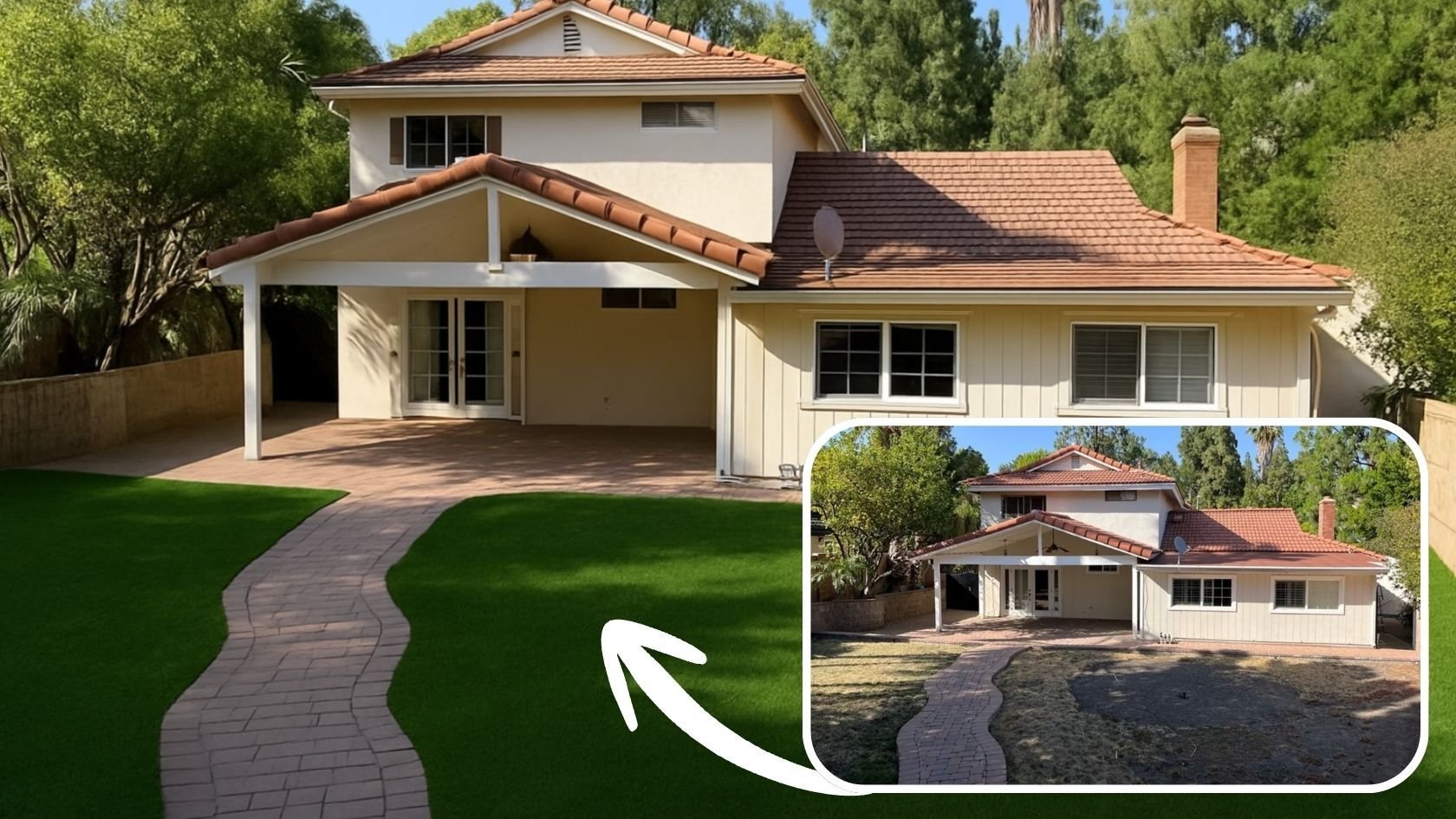
Today, with visualization software, we can drop your material directly into their space—their backyard, rooftop deck, house walls —and make that question disappear.
Across industries, visual and AR/3D product visualization consistently:
Doubles conversions for products shown in AR/3D compared to static images. Superside
Drives 20%+ sales increases for flooring retailers using room visualizers.
Delivers 65–80% higher conversion rates for visual-rich content compared to text alone. Zebracat+1
In other words:
When people can see it, they buy it.
For contractors, that doesn’t just mean more “yes” answers. It means:
Shorter sales cycles
Fewer price shoppers
More premium material selections
And, directly for you as a supplier: more material ordered per year.
Homeowners rarely decide based on spec sheets. They decide based on how the space will feel:
“Will this turf make my yard look clean and high-end?”
“Will this tile make my bathroom look like a hotel?”
“Will this flooring make the room brighter?”
Visualization software lets the contractor drop your turf, tile or flooring into a photo of the homeowner’s actual space, instantly answering those emotional questions.
The top reasons homeowners hesitate:
“What if I pick the wrong color?”
“What if it makes the space look smaller/darker?”
“What if I regret this for the next 10 years?”
Visualizers and before/after previews dramatically reduce that fear. Case studies from décor and flooring visualizer tools show:
Customer satisfaction scores up ~20%
Returns down by ~35% after introducing visualizers, because expectations match reality. TilesView
Less fear = faster decisions = higher close rates.
Commercial clients—property managers, developers, facility directors—buy differently, but they respond to the same core advantages:
Every commercial PM is selling internally: to owners, asset managers, or tenants. When you hand them a visual pack—renderings of the lobby, corridors or rooftop with your material—they suddenly have:
A clear story for decision-makers
Fewer objections about aesthetics
Less risk of “I don’t like how it turned out” later
AR/3D and room visualization tools are now common in real estate and development because they speed up design decisions and reduce waste:
Reports on AR home design show up to 60% reduction in design decision time and 25% less material waste, while client satisfaction roughly doubles. Logiciel Solutions
That combination—faster yes, less rework—makes your contractor far more likely to win and keep commercial accounts… again, using your material.
Let’s be conservative and walk through the math like a sales director looking at a contractor’s pipeline.
300 quotes per year
Average project value: $15,000 (mix of residential & small commercial)
Close rate: 30%
Revenue = 300 × 30% × $15,000 = $1,350,000 from those bids.
Evidence from AR and 3D product visualization (Shopify, AR/3D campaigns, room visualizers) shows around 2× conversions when visual tools are used. Superside+1
So let’s assume:
For non-visual quotes, the close rate stays at 30%.
For visualized quotes, the close rate doubles to 60%.
To be moderate, let's assume that a contractor uses visualization on only 50% of quotes, for the first year, when they buy materials from other suppliers.
Now:
50 visualized quotes → 60% close → 30 jobs
50 standard quotes → 30% close → 15 jobs
Total: 45 wins instead of 30 → 50% more projects closed.
In practice, capacity, scheduling and crew limits mean they may not realize the full 50% revenue increase immediately. To stay conservative, we will use 30% to calculate the financial impact.
Annual revenue: $1,500,000
With a conservative +30% from improved close rates and slightly higher average job size:
New revenue = $1,500,000 × 1.30 = $2,000,000
Extra revenue = $500,000 per year
For landscaping trades, artificial turf and paver materials typically account for 30% of the job value.
Extra material value purchased = $500,000 × 30% = $150,000 per year
So a $1.5M contractor using visualization software modestly and consistently can easily end up buying about $150K more in materials annually—mostly from whichever supplier is tied into their visualizer. Assuming this contractor keeps buying the other half from somebody else. However, the reality of business shows that contractors prefer switching to products that sell better, even when those products are cheaper. Do not be surprised if you see the growth number in the $200,000 range with orders from the existing contractor.
Now let’s look at a more established regional contractor.
Annual revenue: $10,000,000
New revenue = $10,000,000 × 1.15 = $11,500,000
Extra revenue = $1,500,000 per year
Again, with 30% of revenue going to materials:
Extra materials = $1,500,000 × 30% = $500,000 per year
So a $10M contractor who adopts visualization software—and directs it primarily to your catalog—could realistically buy three-quarters of a million dollars more in materials every year.
| Contractor Size | Baseline Revenue | Conservative Uplift from Visualization | New Revenue | Extra Materials Purchased/Year (50% of uplift) |
|---|---|---|---|---|
| Smaller Contractor | $1.5M | +30% | $2M | $150,500 |
| Larger Contractor | $10M | +15% | $11.5M | $500,000 |
Again, this is based on moderate assumptions:
We’re not assuming 2× revenue, only a 15% bump.
We’re using the low end of materials share (30%).
We’re assuming visualization is used on only part of the pipeline.
Real-world performance—especially when the contractor leans into the tool—can be significantly higher.
Here’s what this means in plain language, from someone who has lived on the sales side:
Contractors follow what helps them close. If your SKUs live inside their visualizer and help win jobs, they will favor your materials.
A few key contractors—just 5–10 companies in the $1.5M–$10M range—can translate into hundreds of thousands to several millions of dollars in additional annual material volume for you.
Once a contractor builds their sales process around your visual tool, the relationship becomes extremely sticky; switching away would hurt their close rates.
Visualization is no longer a “nice-to-have.”
It’s a repeatable, measurable way to increase material demand from every serious contractor in your network.